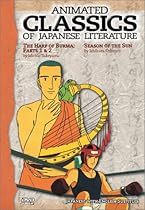
The Harp of Burma is a movie about a Japanese platoon fighting in Burma. To help with the horrors of war and the homesickness the men in the platoon form a choir. There was one soldier named Mizushima who didn’t sing, he played the Burmese Harp. Mizushima never played the harp before the war, but it turned out that he was a natural. A few minutes into the film the war ends and the soldiers are sent to a POW camp, except for Mizushima. He was sent to go Triangle Mountain to tell a platoon that the war was over. After a long period of time Mizushima didn’t rejoin his comrades at the camp. One day while walking across a bridge they saw a Buddhist Priest walk by who looked exactly like their lost friend.
From that moment on they did everything in their power to get in connect with the Buddhist Priest. If it really was their friend Mizushima they wanted him to go back to Japan with them. One day the priest comes to see them men, he doesn’t say a thing he just played his harp and leaves. On the ship back to Japan the men are read a letter from the priest, who turned out to be Mizushima. The letter talked about how much Mizushima missed his friends and his homeland but could not leave Burma. He had found his calling; it was to bury his dead comrades. He couldn’t go home while all those dead Japanese soldiers’ bodies were left to the elements.
 |
| peachyprofiles.com |
We did some reading this week on death and suicide. In Japanese culture death and suicide are treated differently than in America. In anime death happens to everyone; good, bad, young and old. They feel that death is a fact of life and shouldn’t be sugar coated. In America some religions believe in heaven and hell, and that the soul will go to a better place. But in Japan death is seen as a gross and dark thing. Suicide is also treated differently. In Japan suicide is seen as an honorable thing, unless it’s done because of academics or something pointless like that. In America suicide is seen as wrong, in some religions it’s a sin.
In the movie Letters from Iwo Jima the soldiers are told from the superior to kill themselves. Instead of being captured by the enemy they were to do the honorable thing and committed suicide. The man had to decide; do they fight for their country or listen to their superior and die with honor.

After reading your post regarding death and suicide in Japan, I found myself wondering how different the views really are. You said that in Japanese culture, death is seen as a gross and dark thing, but is this really the case? In many cultures, death is seen as something sad, and unfortunately, but the life after death is what seems to be the difference. In many American religions people do believe that their soul can go onto a better life in what is heaven, but the act of dying is still a sad one. I actually believe that the Japanese do not see death as a gross and dark thing, in terms of suicide. When someone takes their life in Japanese culture, as long as it is for a good reason, then it is seen as a good thing. Almost as if the act of dying and taking your own life is the honorable part, and the afterlife part is what isn’t as good. It makes me feel like it’s the opposite of many American beliefs.
ReplyDeleteI agree with Jonathan about the idea of the Japanese thinking that death is a gross and dark thing. Those soldiers that Mizushima abandoned his living comrades for died with honor. I don't believe their deaths would be seen as gross or dark. If they were, I don't think Mizushima would feel so obligated to bury them. I think maybe the Japanese view death more as a transformation or a passing into other worlds. That's something that can be seen as good or bad. They might even see it as something beautiful or awe inspiring... that's probably not the case with the Harp of Burma film, but I don't think gross is a word that should describe their view on death. Now I can see dark, dark can work. But Shinto Japanese believe that those who die enter a spirit world (I think... I could be wrong on this one). And Japanese Buddhist believe in Karma and reincarnation so death is only the beginning in that case. And I guess you could also say that giri and ninjo also take place in the ideas about death. Dying for giri is honorable, dying for ninjo may not be the same... but anyway thanks for sharing your thoughts!
ReplyDeleteAmanda